


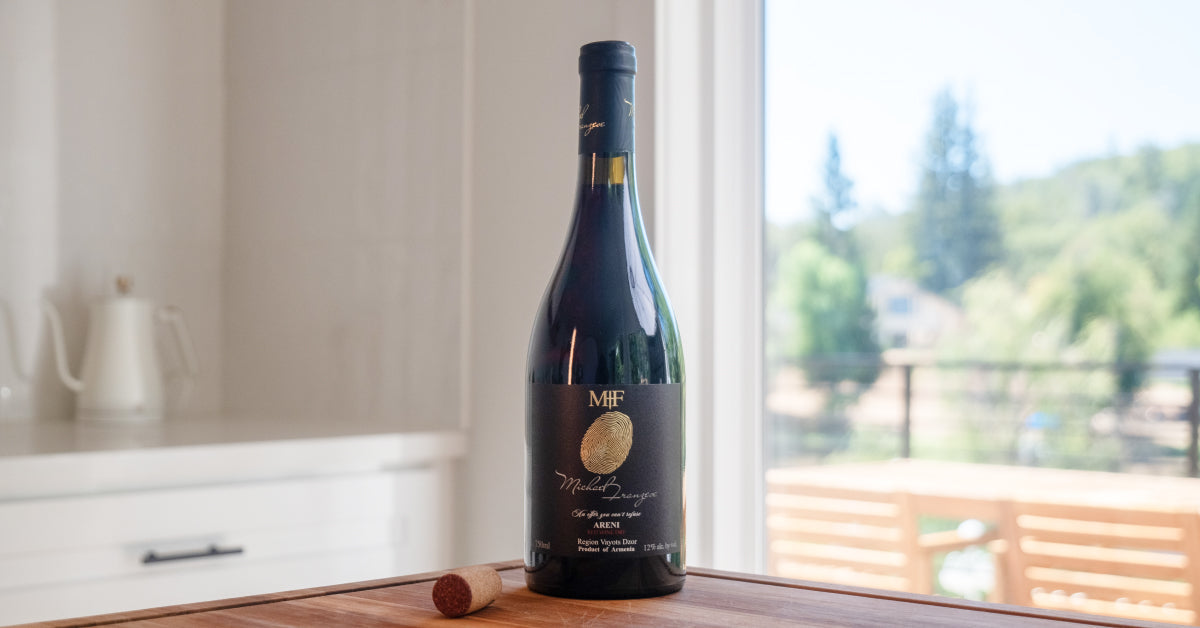
Areni is a dry red wine made from the Areni Noir grape, one of the world's oldest known wine grapes, grown in the Areni region of southern Armenia. It is closely tied to the Areni-1 cave, home to the oldest known winery on Earth. The wine is prized for its accessible, food-friendly style: dark cherry and red-berry notes, soft tannins, and a smooth finish.
If you've never heard of Areni, you're not alone. It sits outside the familiar lineup of Cabernet, Merlot, and Pinot Grigio — yet it may be the closest thing the wine world has to a living link with the very origins of winemaking. This guide explains what Areni is, where it comes from, how it tastes, and why a grape from a small region in Armenia is worth a place on your table.
Where does Areni wine come from?
Areni comes from Armenia, a country widely regarded as one of the birthplaces of winemaking. The grape takes its name from the village of Areni in the Vayots Dzor province, a high-altitude region in the country's south. Vineyards here sit at elevations that create warm days and cool nights — conditions that help grapes ripen fully while keeping their natural acidity and freshness.
Armenia's winemaking tradition stretches back more than 6,000 years. The region's combination of volcanic soils, mountain elevation, and a long, dry growing season has shaped a distinctive style of wine that is only now becoming known to a wider audience. You can read more about that heritage and how it shaped our brand on our story page.
What is the Areni Noir grape?
Areni Noir is an ancient red-wine grape native to Armenia. It is a hardy, thick-skinned variety well suited to high-altitude vineyards, and it produces wines that are dry, medium-bodied, and aromatic. Because the grape has grown in the same region for thousands of years, it is often described as one of the oldest continuously cultivated wine grapes in the world.
Areni Noir is sometimes compared to Pinot Noir for its elegant, red-fruit character and relatively light color, though it is a genetically distinct variety with its own personality. Winemakers value it because it can produce serious, structured wines without the heaviness of some other reds.
Why is Areni connected to the oldest winery in the world?
In 2007, archaeologists excavating the Areni-1 cave in the same region uncovered what is widely recognized as the oldest known winery on Earth, dated to around 4100 BC — roughly 6,100 years ago. The site contained a grape press, fermentation and storage vessels, and grape remains, providing direct evidence that people were making wine here at the dawn of civilization.
That discovery is why Areni carries such historical weight. When you drink a glass of Areni, you're tasting a wine made from grapes cultivated in the same landscape where humans first learned to turn fruit into wine.
What does Areni wine taste like?
Areni is a dry red wine with bright acidity, soft tannins, and flavors of dark cherry, red berries, and subtle spice. It tends to be medium-bodied and smooth rather than bold and tannic, which makes it approachable for both casual drinkers and more experienced wine lovers.
A few tasting characteristics stand out:
- Fruit: dark cherry, red plum, and wild berry notes lead the palate.
- Structure: medium body with gentle tannins and lively acidity.
- Finish: clean and smooth, without the heavy oak or high alcohol of some New World reds.
Because Armenian wines are typically made with no added sugars or sulfates, many drinkers describe the taste as especially pure and easy-drinking.
How should you serve and pair Areni wine?
Serve Areni slightly below room temperature, around 60–65°F (16–18°C), to bring out its fruit and freshness. Like most dry reds, it opens up with a little air, so pouring it 15–20 minutes before drinking helps.
Areni's balanced structure makes it a versatile food wine. It pairs well with:
- Grilled meats, lamb, and kebabs
- Tomato-based pasta and pizza
- Hard and aged cheeses
- Roasted vegetables and mushroom dishes
Its acidity cuts through rich, savory food, while its soft tannins keep it from overpowering lighter dishes.
Is Areni wine dry or sweet?
Areni is a dry red wine, not a sweet one. Its natural fruit character can give an impression of ripeness, but there is no residual sugar sweetness in a traditional Areni. This is part of what makes it so food-friendly — it complements a meal rather than competing with it.
How is Areni different from more familiar wines?
Areni differs from mainstream reds in three main ways: its ancient origin, its Armenian terroir, and its clean, additive-free production. While grapes like Cabernet Sauvignon and Merlot are grown worldwide and often heavily oaked, Areni reflects a single, historic region and a lighter, more transparent winemaking style.
If you enjoy Pinot Noir, Gamay, or lighter-bodied reds, Areni will feel familiar — but it offers something those wines can't: a direct connection to the origins of wine itself. You can browse the full range on our Armenian wines collection.
Where can you buy Areni wine?
Franzese Wine offers Areni as its flagship red — the Franzese Areni Pinot Noir, a 94-point, Gold Medal–winning Armenian red wine. Franzese is the only mass-market Armenian wine available in the United States, and its wines are available directly on this site and through select retail locations.
Founded by former organized-crime figure turned author and speaker Michael Franzese, the brand pairs Armenia's 6,000-year winemaking heritage with a story of transformation and second chances — bringing one of the world's oldest wines to a modern American audience.
The bottom line
Areni is a dry, smooth, food-friendly red wine made from an ancient Armenian grape grown beside the oldest known winery on Earth. It offers the approachability of a lighter red with a history no other wine can claim. Whether you're a curious beginner or a seasoned drinker looking for something genuinely different, the Franzese Areni Pinot Noir is one of the most rewarding wines you can discover — a taste of where wine began.


